



Value Partners Macro Outlook – November 2026
06-11-2026
Supply Constraints and Elevated Interest Rates May Weigh on Economic Expansion

Geopolitical Tensions and Elevated Oil Prices Are Increasingly Inflationary
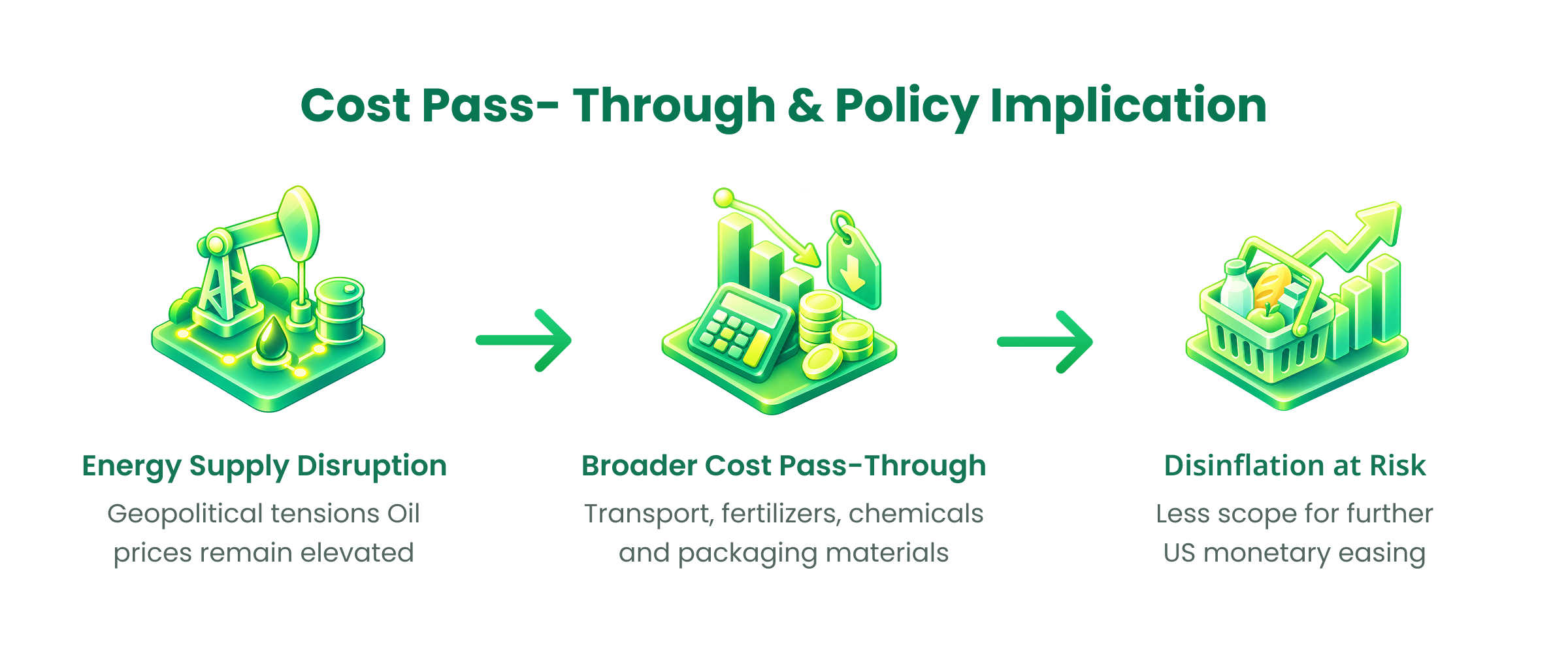
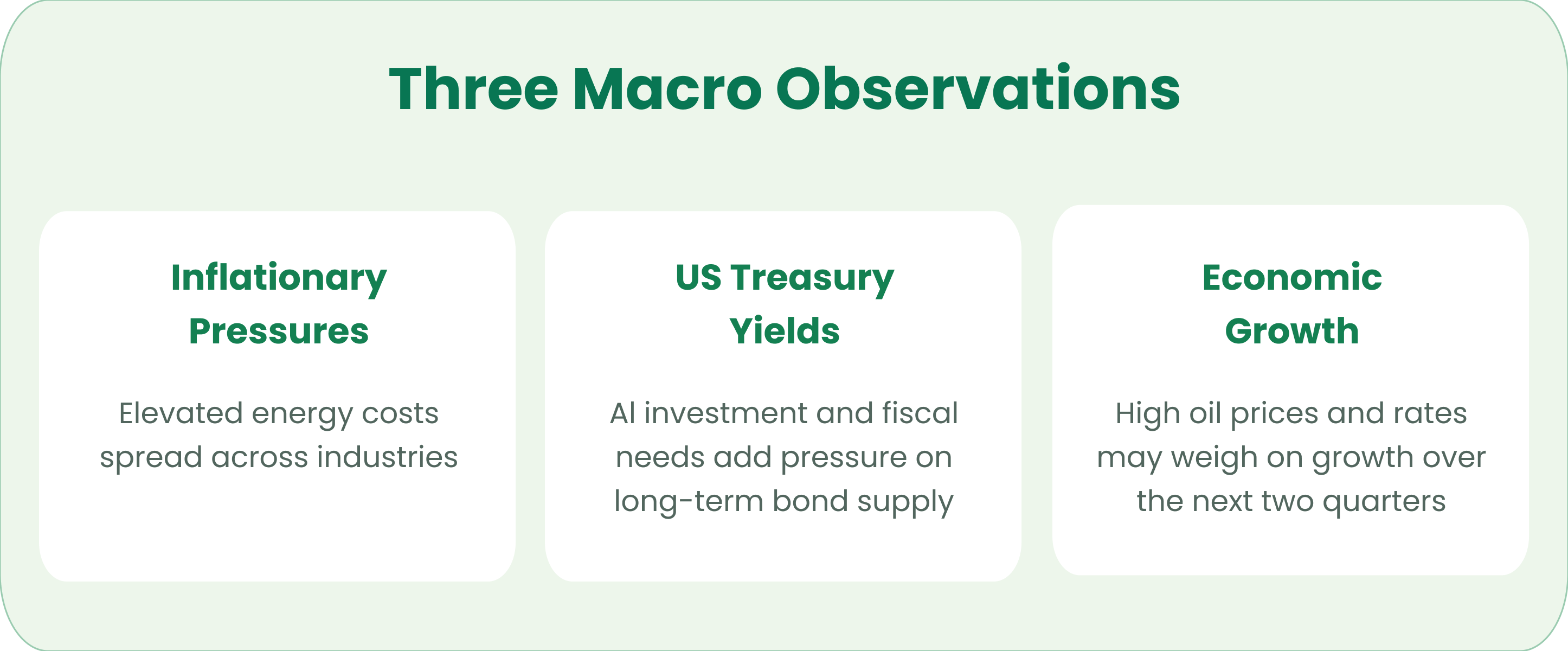
Recent geopolitical conflicts have heightened the risk of disruptions to global energy supply chains, with growing uncertainty surrounding critical transportation routes and energy infrastructure. Against this backdrop, international crude oil prices have remained elevated, with the impact of higher energy costs gradually extending beyond short-term, event-driven disruptions into broader inflationary pressures.
Rising energy prices not only increase transportation costs but also feed through to consumer prices via various supply chains, including fertilizers, chemical feedstocks and packaging materials. This, in turn, raises the cost of living across essential categories such as food, clothing, housing, and transportation. Should energy prices remain elevated for a prolonged period, their impact would no longer be confined to individual industries but could translate into broad-based imported inflation.
Higher Interest Rates Are Likely to Persist for Longer
With supply-side disruptions complicating the disinflation process, the scope for further monetary easing in the United States has become increasingly constrained. Inflation remaining above the Federal Reserve’s long-term target suggests that policymakers will need to maintain vigilance over inflationary risks, with the overall monetary policy stance likely to remain relatively hawkish.
Meanwhile, continued expansion in artificial intelligence (AI) infrastructure investment, alongside growing fiscal financing requirements, has added to supply pressures in the long-dated US Treasury market. From an asset-pricing perspective, both real interest rates and longer-term nominal yields could remain elevated.
We expect US Treasury yields to remain at relatively high levels over the coming period, with the higher-for-longer interest rate environment likely to constrain corporate capital expenditure and end-market demand. In particular, the risks of a moderation in AI-related investment growth and a weaker-than-expected recovery in demand across traditional industries warrant close attention.
Economic Expansion Could Decelerate Over the Next Two Quarters
Taken together, elevated oil prices, persistently high interest rates and moderating demand growth are likely to weigh on the pace of global economic expansion. Corporate earnings face multiple challenges, including rising financing costs, higher raw material expenses and softer end-market demand. As a result, economic growth could remain subdued over the next two quarters.
Against this backdrop of elevated inflation and interest rates, we maintain a neutral stance on the technology sector while seeing attractive allocation opportunities in income-generating assets.
Technology Sector Outlook
Uncertainty surrounding returns on capital expenditure by cloud service providers (CSPs) has increased, while elevated interest rates are placing additional pressure on future financing requirements and project returns. Nevertheless, following the recent market correction, valuations of selected industry leaders have become more attractive.
Investor concerns over the returns on AI investment have been driven primarily by a recent moderation in annual recurring revenue (ARR) growth among leading large language model developers. Meanwhile, some emerging cloud operators remain heavily reliant on external financing, with substantial capital requirements for equipment procurement and upgrades. Rising funding costs could directly erode shareholder returns and potentially delay project delivery.
Nevertheless, current operating data across the AI supply chain continue to support maintaining exposure to high-quality hardware companies. A leading Taiwanese semiconductor manufacturer reported year-on-year revenue and net profit growth of 50.9% and 68.7%, respectively, in the third quarter, while its fourth-quarter revenue guidance points to further sequential growth. We expect AI investment to gradually enter a phase characterized by moderate growth and greater emphasis on investment returns among customers. This transition is likely to widen the divergence in growth prospects across different segments of the supply chain. However, increases in content value per unit driven by technological upgrades, together with market share gains among industry leaders, should continue to support earnings growth for selected companies.
Following the recent market correction, valuations of leading companies now offer a greater degree of downside protection. Taiwan Semiconductor Manufacturing Company (TSMC), for example, is trading at approximately 16 times projected 2027 earnings. We remain cautiously optimistic about companies with sustainable competitive advantages and the potential to deliver strong earnings growth over the next two years.
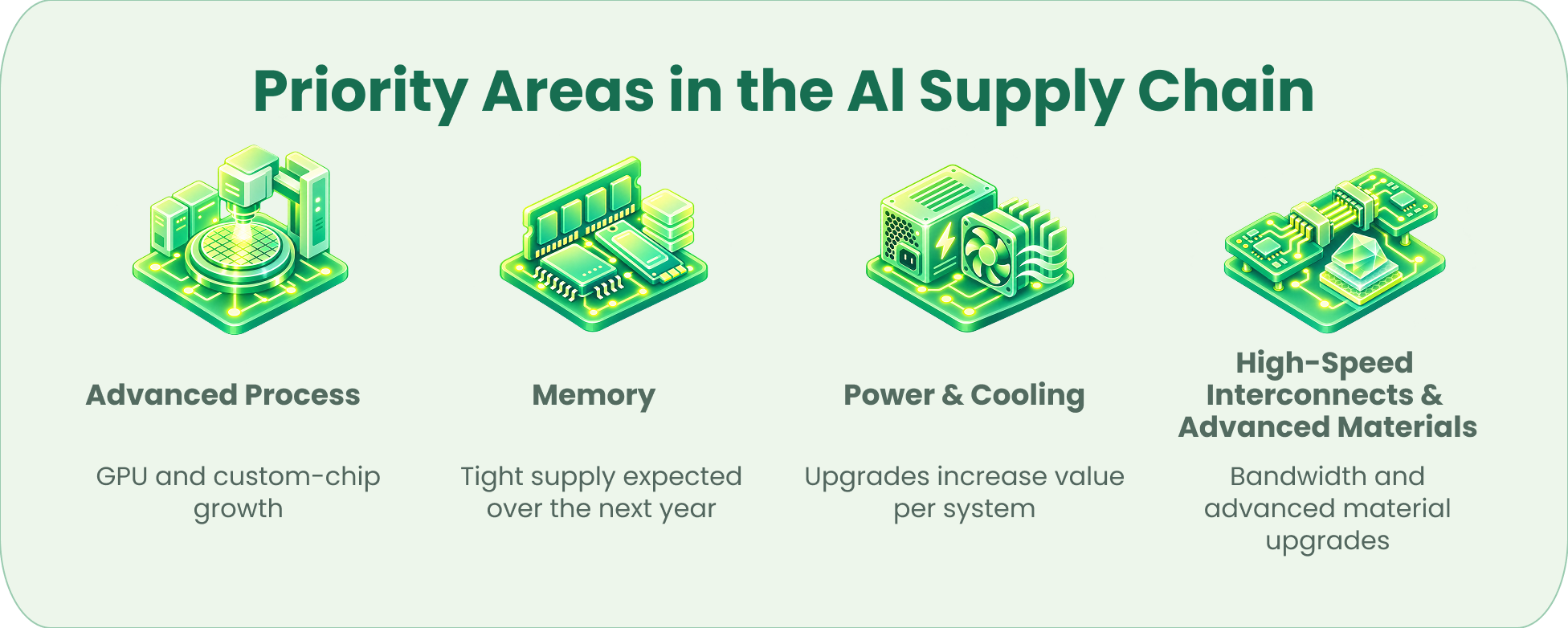
Our key areas of focus include advanced semiconductor manufacturing processes, memory, power management and thermal solutions, high-speed interconnects, and advanced materials. Leading foundries are well positioned to benefit from the parallel expansion of graphics processing units (GPUs) and custom-designed chips, supported by diversified customer bases and exposure to multiple technological architectures. Memory is expected to remain one of the most supply-constrained segments over the coming year. Long-term supply contracts should help establish a stronger floor for earnings over the longer term, while the sharp correction in valuations suggests that expectations for further price increases have already been largely priced in. Increasing power density within AI server racks and upgrades to power delivery architectures should continue to drive higher content value per system, supporting growth opportunities across power management, cooling and related testing solutions. High-speed interconnects and advanced materials, including semiconductor substrates, should benefit from upgrades in bandwidth requirements, circuit-board complexity and material specifications. Key considerations include customer qualification, mass-production capabilities and market share in high-end products. Even if capital expenditure growth moderates, leading companies within these segments should remain capable of sustaining relatively strong growth.
We remain constructive on companies with technological leadership, established customer relationships and a proven ability to translate revenue growth into sustainable cash flows. At the same time, we maintain a disciplined approach towards capacity expansion, potential shareholder dilution from external financing and valuation risks. The memory sector continues to warrant selective investment consideration, with particular emphasis on competitive advantages in high-bandwidth memory (HBM) and server-related products. We will also closely monitor additional supply, technological competition and pricing developments. Conversely, we prefer to remain on the sidelines in segments where near-term reported earnings appear robust but rapid capacity expansion and a potentially deteriorating competitive landscape could undermine longer-term profitability.
Income-Generating Assets Outlook
Against a macroeconomic backdrop characterized by elevated interest rates, persistent inflation and slowing aggregate demand, we believe income-generating assets continue to offer attractive allocation opportunities. Stable cash flows, resilient earnings and sustainable shareholder distributions should provide relative advantages in the prevailing environment.
We categorize income-generating assets into three broad investment themes: stable income, cyclical income and growth-oriented income.
Stable Income: Prioritizing Assets with High Earnings Visibility
As economic growth moderates, corporate earnings face an increasing risk of downward revisions. We therefore place greater emphasis on sectors capable of generating stable cash flows and providing relatively predictable earnings.
Our preferred sectors include:
- Banking
- Telecommunications operators
- Utilities
These sectors generally benefit from relatively high barriers to entry, strong cash-generating capabilities and attractive dividend yields. Their defensive characteristics should become particularly valuable during periods of heightened macroeconomic uncertainty.
Cyclical Income: Selectively Targeting Industries with Supply-Side Constraints
Within cyclical sectors, we place greater emphasis on underlying supply-demand dynamics rather than focusing solely on changes in end-market demand. We believe supply-side constraints in selected industries could outweigh the impact of moderating demand, allowing sector earnings to remain relatively resilient.
Our key areas of interest include:
- Energy
- Primary aluminum production
- Hog farming
With capacity expansion remaining constrained, these industries could continue to deliver healthy profitability, and shareholder returns as supply-demand fundamentals improve.
In addition, we see opportunities in industries that reflect China’s growing competitiveness in advanced manufacturing, including:
In addition, we see opportunities in industries that reflect China’s growing competitiveness in advanced manufacturing, including:
- Construction machinery
- Lithium battery supply chains
Supported by expanding global footprints and strong export competitiveness, these industries should remain well positioned to capture sustainable growth opportunities. With valuations currently trading towards the lower end of historical ranges and dividend yields remaining attractive, we maintain a positive view on high-quality companies within these sectors.
Growth-Oriented Income: Balancing Shareholder Returns with Earnings Growth
For growth-oriented income assets, our investment approach seeks to balance sustainable shareholder distributions with long-term growth potential. We focus particularly on industries where earnings growth is expected to remain resilient or improve progressively.
Our preferred sectors include:
- Semiconductor Foundries
Industry competition dynamics continue to improve, while downstream demand remains robust. Advanced semiconductor manufacturing capacity remains relatively constrained, with limited scope for a rapid increase in supply over the near term. These favorable supply-demand fundamentals should continue to underpin strong profitability across the sector.
- Internet Platform Companies
Valuations across the internet platform sector remain relatively reasonable. As industry competition becomes more rational, profitability in core businesses improves and AI-related monetization opportunities gradually materialize, we remain optimistic about the earnings growth and shareholder return prospects of leading platform companies over the coming years.

The views expressed are the views of Value Partners Hong Kong Limited only and are subject to change based on market and other conditions. The information provided does not constitute investment advice and it should not be relied on as such. All materials have been obtained from sources believed to be reliable as of the date of presentation, but their accuracy is not guaranteed. This material contains certain statements that may be deemed forward-looking statements. Please note that any such statements are not guarantees of any future performance and actual results or developments may differ materially from those projected.
Investors should note that investment involves risk. The price of units may go down as well as up and past performance is not indicative of future results. Investors should read the explanatory memorandum for details and risk factors in particular those associated with investment in emerging markets. Investors should seek advice from a financial adviser before making any investment. In the event that you choose not to do so, you should consider whether the investment selected is suitable for you. This article has not been reviewed by the Securities and Fuures Commission of Hong Kong. Issuer: Value Partners Hong Kong Limited.
For Singapore Investors: This article has not been reviewed by the Monetary of Singapore. Value Partners Asset Management Singapore Pte. Ltd., Singapore. Company Registration No. 200808225G